Wii Power Supply Board Repair Complete Guide
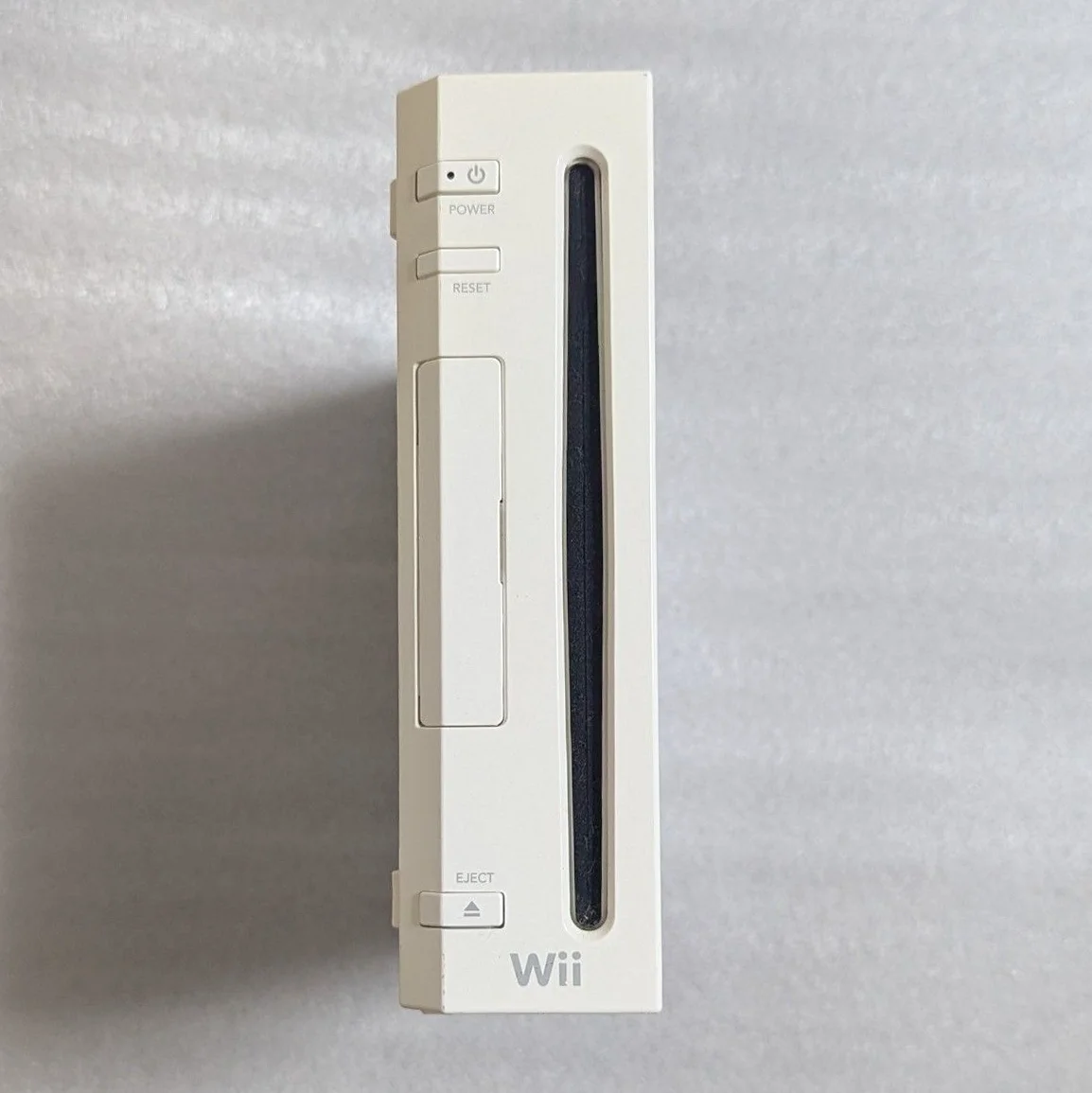
Your Wii won't power on, indicator lights don't illuminate, or powers off after few seconds, scariest is black screen and smoke mid-game! Wii's power design is more complex than GameCube, but separate power board makes repair relatively simple. Don't panic, most power issues can be diagnosed and fixed.
Required Tools
- Cross-head screwdriver, PH0 specification
- Tri-wing screwdriver (Y-type), Wii-specific
- Multimeter, digital preferred
- Soldering iron and solder
- Hot air station (optional, for desoldering)
- Capacitor kit (mainly electrolytic capacitors)
- Anhydrous alcohol and cotton swabs
- Anti-static gloves and work mat
- Isolation transformer (safety consideration)
Repair Steps
1. Safe Disassembly, Remove Power Board
- Unplug all cables, note sensor bar position
- Remove all bottom screws (note hidden screws under rubber feet)
- Open case, careful with WiFi and Bluetooth antennas
- Locate power board - large circuit board at rear of console
- Disconnect power board from motherboard cables
- Remove screws securing power board, remove power board
2. Power Board Visual Inspection
- Capacitor check: Focus on main filter capacitors and output filter capacitors
- Fuse check: Locate board fuses, check if blown
- Rectifier bridge check: Check 4 diodes or integrated rectifier bridge
- Switching transistor check: Check MOSFET switching transistors for burn marks
- PWM chip check: Check power management chip for abnormalities
- Resistor check: Check high-power resistors for discoloration, cracks
3. Voltage Measurement and Diagnosis
- Input measurement: Measure voltage at power input, should be 110V or 220V
- Fuse testing: Use multimeter continuity mode to test fuse conduction
- Rectified voltage: Measure rectifier bridge output, should have ~300V DC
- Output measurement: Measure voltage at each pin of power board output connector
- Pin 1: +12V (disc drive motor)
- Pin 2: +5V (motherboard core power)
- Pin 3: +3.3V (chip power)
- Pin 4: +1.15V (GPU core power)
- Pin 5: GND (ground)
4. Common Fault Repair
Fault 1: Completely unresponsive
- Check fuse, replace with same specification (usually 2.5A)
- Check rectifier bridge, replace if damaged
- Check switching transistors, replace with same model MOSFET
- Check startup resistors, measure resistance values
Fault 2: Powers off after few seconds
- Check main filter capacitors, replace bulging capacitors
- Check feedback circuit, especially optocoupler and TL431
- Check output capacitors, replace aging capacitors
- Check overcurrent protection circuit
Fault 3: Unstable or low voltage
- Check voltage regulation circuit, especially 431 reference voltage source
- Check feedback resistor network, measure resistance changes
- Check output filter capacitors, replace all with low ESR capacitors
- Check PWM chip power supply
Fault 4: Abnormal noise
- Check transformer for looseness
- Check capacitors for failure
- Check for poor component contact
- Check circuit board for cracks
5. Capacitor Replacement Guide
Wii power board common capacitor specifications:
Input filtering section:
- Main filter capacitor: 400V 68μF (110V version) or 400V 33μF (220V version)
Output filtering section:
- +12V output: 16V 470μF
- +5V output: 10V 1000μF
- +3.3V output: 6.3V 470μF
- +1.15V output: 2.5V 330μF
Recommended brands:
- Rubycon
- Nichicon
- Panasonic
- Use 105°C high-temperature capacitors
6. Key Chip Identification and Testing
Wii power board common chips: 1. PWM controller: Usually ICE series or similar 2. MOSFET switching transistor: Usually 7N60 or similar 3. Rectifier bridge: Usually GBU series 4. Optocoupler: Usually PC817 or similar
Testing methods: 1. Measure chip power pin voltages 2. Check chip peripheral components 3. If oscilloscope available, check PWM output waveform 4. Compare measurements with known good board
7. Assembly and Testing
- Clean power board, remove flux residue
- Reinstall into console, connect all cables
- Test without cover first: Observe for abnormal heating, smoke
- Test power on: Indicator should light, disc drive should activate
- Test standby mode: Red indicator should light
- Test power on mode: Blue indicator should light
- Continuous operation 2 hours, test stability
Parts and Price Reference
| Required Part | Reference Price | Purchase Channel | Player Advice |
|---|---|---|---|
| Wii Power Board Assembly | ¥60-120 | Xianyu/Taobao | Direct replacement easiest |
| Main Filter Capacitor | ¥5-10 | Electronics market | Buy 105°C high-temp capacitors |
| Output Filter Capacitor Kit | ¥20-30 | Taobao | Complete replacement best effect |
| Fuse (2.5A) | ¥2-5 | Hardware store | Buy slow-blow type fuse |
| PWM Chip | ¥15-25 | Electronics market | Requires soldering skills |
Wii Power Technical Details
🎮 Power Version Differences
- Japanese/US version: 110V input, main filter capacitor 68μF
- European/Australian version: 220V input, main filter capacitor 33μF
- Chinese version: 220V input, relatively rare
⚡ Power Board Model Identification
- RVL-001: Original Wii, higher power consumption
- RVL-101: Later simplified version, lower power consumption
- Board compatibility: Most models interchangeable, but check connectors
🔌 Power Consumption Characteristics
- Standby power: ~2-3W
- Operating power: ~15-20W
- Peak power: ~25W (during disc reading)
- Efficiency: Significant improvement over GameCube
Safety Precautions
⚠️ High Voltage Warning!
- Power off operation: Must unplug power cable before repair
- Capacitor discharge: Large capacitors store high voltage, must discharge before repair
- Isolated work: Use insulated work mat, avoid electric shock
- Single operator: Don't let others touch during repair
- Use isolation transformer: Strongly recommended, increases safety
🔧 Soldering Techniques
- Temperature control: Soldering iron around 350°C
- Time control: Each solder joint under 3 seconds
- Clean solder pads: Use desoldering pump or wick
- Check cold joints: Inspect each solder joint after soldering
- Flux: Use no-clean flux
Repair Difficulty: ★★★★☆
Estimated Time: 2-4 hours
Success Probability: 85% (capacitor issues), 65% (chip issues)
🎯 Alternative: External Power Adapter
If power board truly unfixable: 1. Purchase OEM power adapter: Ensure voltage/current match 2. DIY external power: Modify ATX power supply 3. Advantages: Reduces console heating, improves stability 4. Disadvantages: Loses simplicity, needs extra space
📊 Power Board Lifespan Reference
- OEM power board: Normal use 8-10 years
- Capacitor lifespan: Electrolytic capacitors 5-8 years (shorter in high temp)
- Common failure time: Capacitor issues start at 3-5 years
- Best practice: Maintain ventilation, avoid dust accumulation
Player Reflection: Wii's power design was quite advanced for its time - efficient, low heat. After fixing power issues, seeing that blue indicator light up, hearing disc drive start spinning, you know you can play Wii Sports with family and friends again. Wii's motion games are perfect for family gatherings, worth maintaining carefully.
Final Advice: If unfamiliar with high voltage circuits, recommend directly replacing entire power board. Safety first, don't risk your life. After repair, test sufficiently long time to ensure complete stability!
🔍 Advanced Diagnosis: Oscilloscope Detection
If you have oscilloscope: 1. Check switching frequency: Normal should be 50-100kHz 2. Check ripple: Output ripple should be under 50mV 3. Check transient response: Voltage recovery time during load changes 4. Check PWM waveform: Ensure normal duty cycle
🛠️ Post-Repair Maintenance
- Regular cleaning: Clean dust every 6 months
- Avoid overheating: Don't run continuously for long periods
- Use voltage stabilizer: Recommended in areas with unstable voltage
- Backup saves: Regularly backup important game saves