Complete Guide to GameCube Controller Cable Repair
Overview
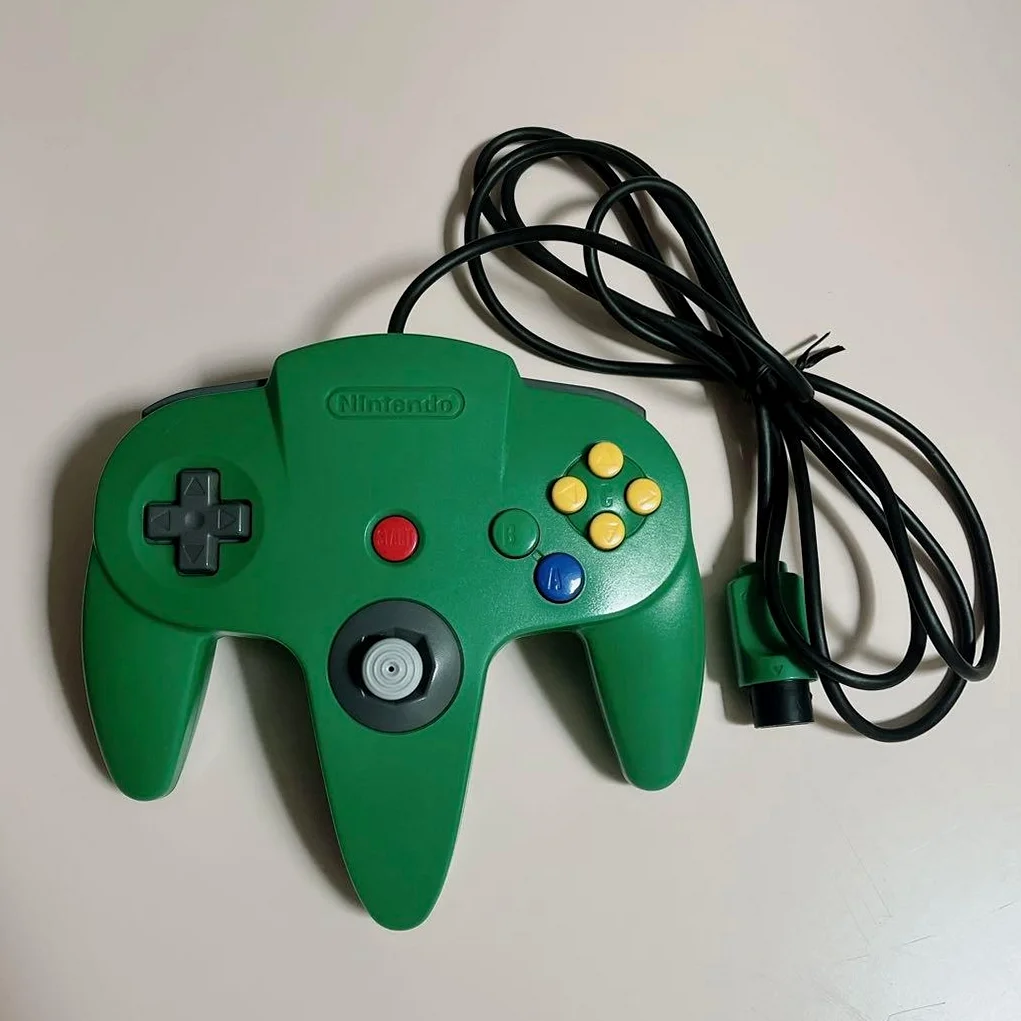
The GameCube controller cable is the lifeline between the controller and console, prone to wear, breakage, and poor contact issues after extended use. This comprehensive guide covers diagnosis, repair, and replacement methods for GameCube controller cables.
Cable Structure and Specifications
Physical Specifications
- Cable Length: Approximately 2 meters (original specification)
- Conductor Count: 6 cores (power, ground, data, clock, etc.)
- Outer Diameter: Approximately 4.5mm
- Connector Type: Dedicated GameCube controller plug
Cable Color Coding (Standard)
- Red: +5V Power
- Black: Ground (GND)
- White: Data line (DATA)
- Green: Clock line (CLK)
- Yellow: Spare or specific function
- Blue: Spare or shield wire
Key Test Points
- Connector Pin Definitions:
- Pin 1: +5V
- Pin 2: Data
- Pin 3: Ground
- Pin 4: Clock
- Pin 5: Spare
- Pin 6: Shield/Ground
Common Failure Types
A. Physical Damage
- Cable Jacket Wear: Outer insulation cracking exposing internal conductors
- Conductor Breakage: Internal copper wire fractures causing open circuits
- Connector Damage: Plug deformation, bent or broken pins
- Stress Point Damage: Damage at plug base or bend points
B. Electrical Faults
- Intermittent Connection: Unstable connections that work sporadically
- Complete Open Circuit: One or more conductors completely broken
- Short Circuit Fault: Accidental contact between conductors
- Increased Contact Resistance: Oxidation or corrosion raising resistance
C. Functional Abnormalities
- Power Issues: Unstable controller power supply
- Data Errors: Communication errors or packet loss
- Function Loss: Specific functions failing
- Interference Problems: Electromagnetic interference causing signal errors
Diagnostic Tools and Equipment
Basic Tools
- Digital multimeter (essential)
- Wire strippers and cutters
- Soldering station and solder
- Heat shrink tubing and heat gun
- Magnifying glass or microscope
Professional Equipment (Optional)
- Cable tester
- Network analyzer (impedance testing)
- Oscilloscope (signal integrity)
- Pull force tester
Consumable Materials
- Replacement cables (original or compatible)
- Solder wire and flux
- Electrical tape and sleeving
- Connector plugs (if needed)
- Epoxy resin (for reinforcement)
Safety Precautions
⚠️ Electrical Safety - Ensure controller is completely powered off before repair - Avoid shorting 5V power and ground lines - Use appropriate insulation materials - Check all connections before testing
⚠️ Thermal Safety - Use appropriate temperature when soldering - Avoid burns and fire hazards - Operate in well-ventilated area - Handle hot tools properly
⚠️ Mechanical Safety - Use sharp tools carefully - Avoid internal cable damage - Watch for springs and clips - Prevent component loss
Detailed Diagnostic Procedure
Step 1: Visual Inspection
- Overall Inspection:
- Check entire cable length for obvious damage
- Look for jacket wear, compression marks, or cuts
-
Check if plug is deformed or damaged
-
Critical Area Inspection:
- Plug Base: Most common breakage point
- Bend Points: Frequently flexed areas
- Stress Points: Cable anchor points
- Connectors: Internal solder joint condition
Step 2: Continuity Testing
- Individual Wire Testing:
- Use multimeter resistance mode
- Test continuity of each conductor from plug to board
-
Record resistance values (should be <1Ω)
-
Short Circuit Testing:
- Test for shorts between conductors
- Check if conductors contact shield layer
- Verify insulation performance
Step 3: Dynamic Testing
- Flex Testing:
- Bend cable at suspected fault points
- Observe multimeter reading changes
-
Locate intermittent fault points
-
Pull Testing:
- Gently pull each cable section
- Test connection strength
- Identify potential weak points
Step 4: Functional Testing
- Console Connection Test:
- Actually connect to GameCube console
- Test all controller functions
-
Observe fault symptoms
-
Substitution Test:
- Compare with known good cable
- Isolate cable fault from other issues
- Confirm fault scope
Detailed Repair Methods
A. Jacket Repair
Minor Wear Repair
- Cleaning Treatment:
- Clean worn area with isopropyl alcohol
- Remove dirt and oxides
-
Check if conductors are exposed
-
Insulation Repair:
- Wrap with electrical tape
- Or use heat shrink tubing for protection
-
Ensure complete insulation
-
Reinforcement Treatment:
- Add spring protector sleeve
- Use cable protection mesh
- Epoxy reinforcement (optional)
Severe Damage Repair
- Cut Damaged Section:
- Cut on both sides of damaged area
- Leave sufficient length for reconnection
-
Clean cut edges
-
Reconnection:
- Connect conductors according to color matching
- Solder or use connectors
-
Insulate each connection point
-
Overall Protection:
- Use large diameter heat shrink tubing
- Or braided mesh protector
- Mark repair location
B. Conductor Break Repair
Single Wire Repair
- Locate Break Point:
- Use multimeter for segment testing
- Or use flex method for location
-
Mark exact position
-
Strip Wire Preparation:
- Strip wire on both sides of break point
- Expose sufficient length (10-15mm)
-
Clean copper wire surface
-
Connection Methods:
- Soldering Method: Most reliable, requires skill
- Crimping Method: Use specialized connectors
-
Twisting Method: Temporary solution
-
Insulation Treatment:
- Insulate each connection point individually
- Use heat shrink tubing or electrical tape
- Ensure no short circuit risk
Multiple Wire Repair
- Sequential Repair:
- Repair one wire at a time
- Avoid confusing color coding
-
Test each wire before continuing
-
Staggered Connections:
- Offset connection points
- Reduce overall diameter increase
-
Improve mechanical strength
-
Overall Insulation:
- After all repairs completed
- Use large heat shrink tubing for overall wrapping
- Or braided mesh sleeve protection
C. Plug Repair
Plug Base Repair
- Open Plug Housing:
- Find fixing clips or screws
- Carefully open housing
-
Note internal structure
-
Internal Inspection:
- Check if solder joints are cracked
- Check if pins are loose
-
Check strain relief structure
-
Resoldering:
- Clean old solder joints
- Re-tin and solder
-
Ensure full, shiny solder joints
-
Strain Relief:
- Add hot glue for fixation
- Or use epoxy resin
- Improve mechanical strength
Pin Repair
- Bent Pin Correction:
- Carefully correct with tweezers
- Avoid multiple bends
-
Check contact performance
-
Broken Pin Replacement:
- Replace entire plug if spare available
- Or transplant from donor controller
- Ensure correct pin definitions
D. Complete Cable Replacement
Preparation
- Select Replacement Cable:
- Original salvage cable (best)
- High-quality compatible cable
-
Custom cable (requires skill)
-
Length Matching:
- Measure original cable length
- Prepare slightly longer cable
- Consider routing space
Replacement Steps
- Old Cable Removal:
- Record original connection method
- Photograph color correspondence
-
Carefully remove old cable
-
New Cable Preparation:
- Cut to original length
- Strip wires for soldering
-
Pre-tin treatment
-
Soldering Installation:
- Solder according to color matching
- Ensure solder joint quality
-
Check for no shorts
-
Test Verification:
- Test immediately after soldering
- Verify all functions
- Ensure no errors
Professional Repair Techniques
Soldering Techniques
- Temperature Control:
- Cable soldering: 350-380°C
- Plug soldering: 320-350°C
-
Quick soldering to avoid overheating
-
Solder Joint Quality:
- Full, smooth solder joints
- No cold joints or dry joints
-
Appropriate solder amount
-
Insulation Treatment:
- Insulate after solder joints cool
- Use appropriately sized heat shrink tubing
- Ensure complete coverage
Stress Management
- Bend Radius:
- Maintain minimum bend radius
- Avoid sharp angle bends
-
Reduce stress concentration
-
Anchor Point Design:
- Add anchors at critical points
- Use cable ties or adhesive
-
Distribute stress
-
Protection Structures:
- Spring protector sleeves
- Braided mesh sleeves
- Custom protection pieces
Post-Repair Testing
Electrical Testing
- Continuity Testing:
- All conductor resistance < 1Ω
- No shorts between conductors
-
Insulation resistance > 10MΩ
-
Voltage Testing:
- 5V power supply stability
- Signal line voltage range
- Ground continuity
Mechanical Testing
- Flex Testing:
- Full range flex testing
- Check connection stability
-
Observe resistance changes
-
Pull Testing:
- Appropriate pull force testing
- Check connection strength
- Verify strain relief
Functional Testing
- Basic Functions:
- Console connection recognition
- All button testing
-
Joystick function testing
-
Stress Testing:
- Extended continuous use
- Repeated plug/unplug testing
- Actual gameplay testing
Preventive Maintenance
Daily Usage Recommendations
- Proper Plug/Unplug:
- Hold plug body for insertion/removal
- Avoid pulling on cable
-
Insert/remove vertically
-
Cable Management:
- Avoid excessive bending
- Don't wrap too tightly
-
Use cable organizers
-
Storage Methods:
- Store loosely coiled
- Avoid heavy objects on cable
- Store in dry environment
Regular Inspection
- Monthly Inspection:
- Visual inspection
- Plug cleaning
-
Function testing
-
Annual Maintenance:
- Deep cleaning
- Stress point inspection
- Performance verification
Repair Difficulty Assessment
- Jacket Repair: Easy (95% success rate)
- Conductor Repair: Medium (85% success rate)
- Plug Repair: Medium-Difficult (75% success rate)
- Complete Replacement: Difficult (70% success rate)
- Professional Modification: Expert Level (60% success rate)
Cost-Benefit Analysis
DIY Repair Costs
- Material Cost: $3-8 USD
- Tool Investment: $30-80 USD (one-time)
- Time Cost: 1-3 hours
- Learning Cost: Basic electronics skills
Professional Repair Costs
- Simple Repair: $12-25 USD
- Complex Repair: $25-50 USD
- Complete Replacement: $35-65 USD
- Time: 2-5 days
Replacement Costs
- Compatible Cable: $10-20 USD
- Original Salvage: $15-35 USD
- With Controller: $25-50 USD
Alternative Solutions
Temporary Solutions
- Position Fixing: Find working position and fix in place
- Function Simplification: Disable faulty functions and continue use
- External Reinforcement: Temporary protection with tape or sleeves
Long-term Solutions
- Wireless Modification: Convert to wireless controller
- Extension Cable Use: Use extension cable to bypass damaged section
- Controller Transplant: Transplant motherboard to other housing
Professional Services
- Custom Cables: Custom high-quality replacement cables
- Professional Repair: Seek professional repair service
- Collection Treatment: Display as collectible item
Professional Advice
Skill Development
- Start Simple: Practice jacket repair first
- Learn Soldering: Master basic soldering skills
- Understand Circuits: Learn basic electronics knowledge
- Practice Accumulation: Practice more to improve skills
Quality Control
- Test First: Test before and after repair
- Document Process: Photograph repair steps
- Use Quality Materials: Choose reliable materials
- Safety First: Always follow safety standards
Summary
GameCube controller cable repair is a practical and economical skill that can significantly extend controller lifespan. With proper diagnosis and appropriate repair techniques, most cable issues can be resolved.
Key Success Factors: 1. Accurate fault diagnosis 2. Suitable repair methods 3. High-quality repair materials 4. Thorough testing verification
Whether you want to repair your beloved original controller or perform batch repairs, these skills will be very valuable. Remember: Patience and attention to detail are key to successful repairs.
Last Updated: March 1, 2026
Applicable Models: All GameCube controller cables
Technical Level: Beginner to Intermediate
Safety Level: Requires basic electronics safety knowledge
Recommended Experience: Basic soldering and electronics repair experience